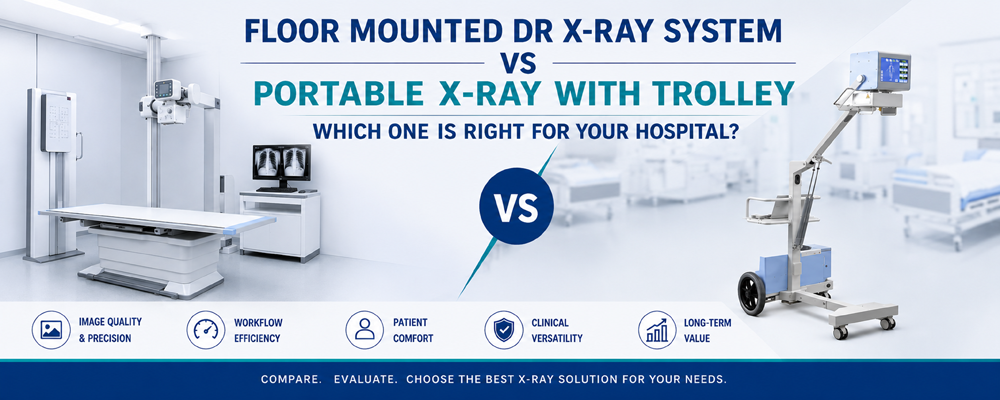
Learn the key differences between a Floor Mounted DR X-ray System vs Portable X-ray with Trolley. Compare image quality, clinical applications, workflow efficiency, advantages, limitations, and how to choose the best solution for hospitals, clinics, and diagnostic centers.
Choosing between a Floor Mounted DR X-ray System vs Portable X-ray with Trolley can be challenging for hospitals, clinics, and imaging centers. Selecting the wrong system may limit diagnostic capabilities, reduce workflow efficiency, and increase operational costs. Understanding the strengths and limitations of each solution helps healthcare facilities make the right investment.
The primary difference between a Floor Mounted DR X-ray System and a Portable X-ray with Trolley is that a floor-mounted system provides comprehensive radiography capabilities and higher patient throughput, while a portable system offers bedside imaging flexibility for ICU, emergency, and mobile healthcare applications.
However, mobility is only one factor in the purchasing decision. Clinical applications, image quality, workflow efficiency, installation requirements, and future expansion plans all play important roles when selecting a digital radiography system.
What Is the Difference Between a Floor Mounted DR X-ray System and a Portable X-ray with Trolley?
Many buyers assume that both systems serve the same purpose because they generate digital X-ray images. However, choosing solely based on price or mobility can create significant limitations later.
A Floor Mounted DR X-ray System is designed for comprehensive diagnostic imaging in a dedicated radiology room, while a Portable X-ray with Trolley is primarily designed for bedside and mobile radiography.
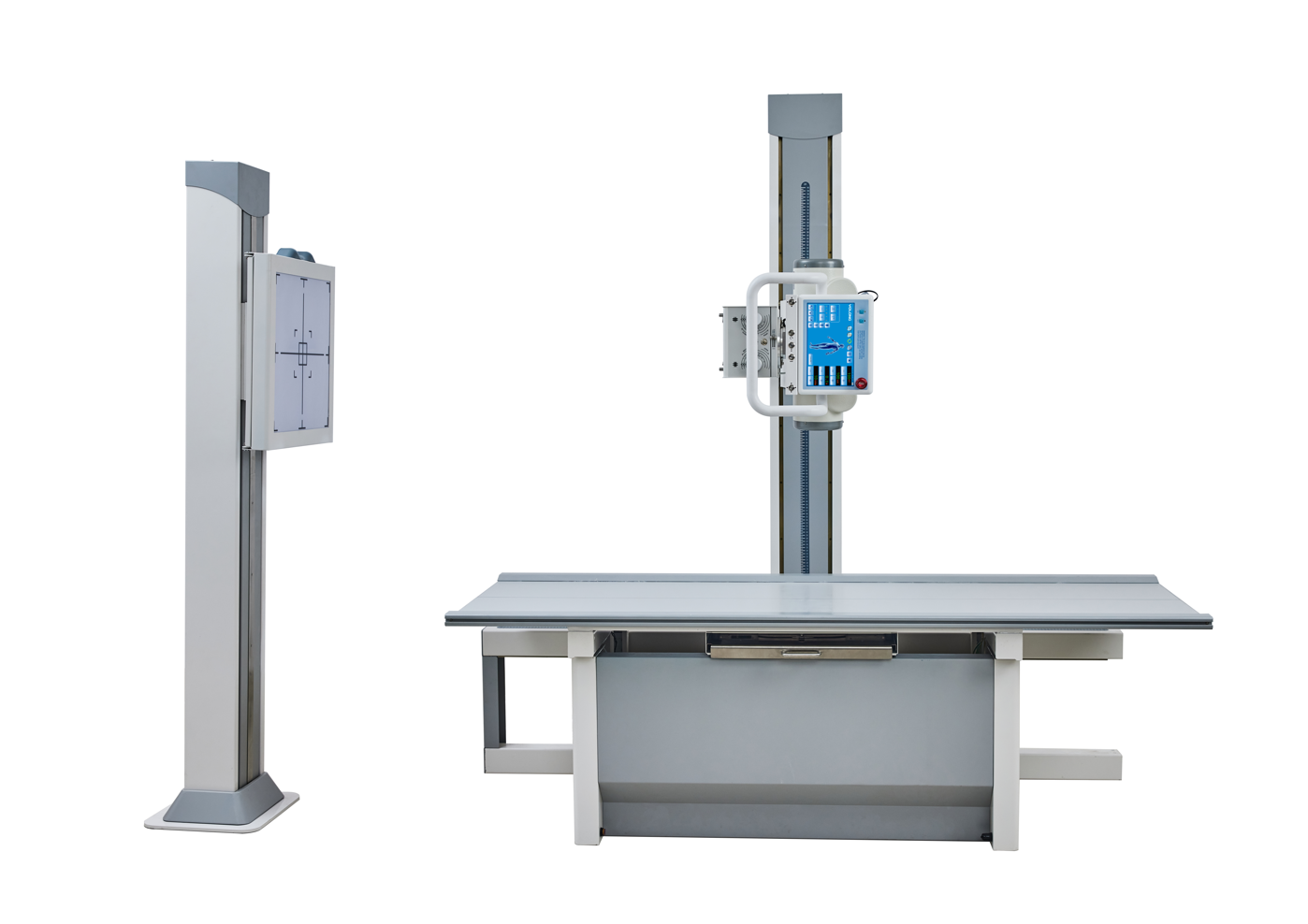
A Floor Mounted DR X-ray System typically consists of:
- X-ray generator
- X-ray tube assembly
- Radiographic table
- Vertical bucky stand
- Flat panel detector
- Digital imaging workstation
This configuration allows healthcare providers to perform both table examinations and standing examinations efficiently.
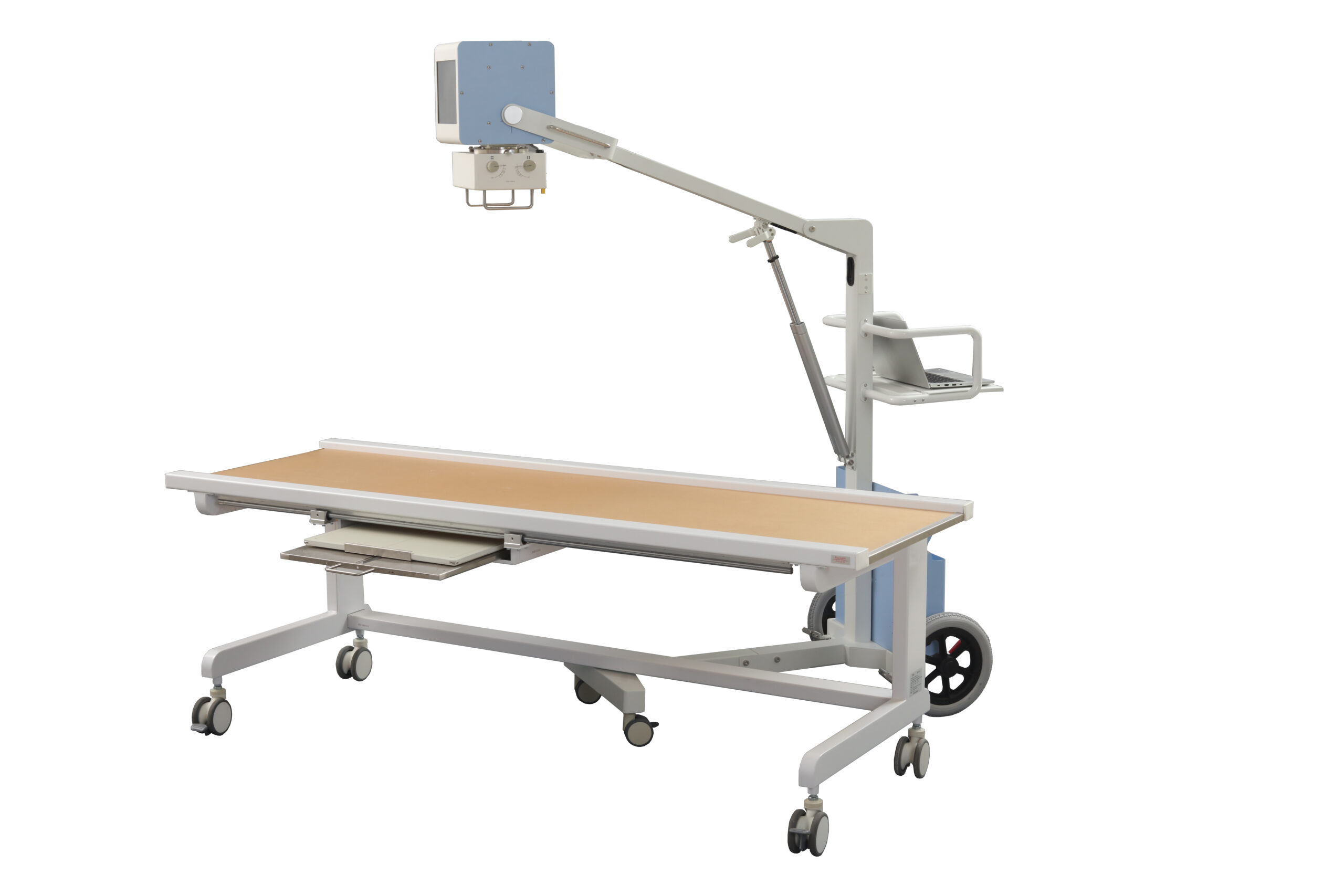
A Portable X-ray with Trolley generally includes:
- Mobile X-ray generator
- Portable detector
- Integrated workstation
- Mobile trolley structure
These systems are optimized for flexibility and patient accessibility rather than high-volume workflow.
The choice depends on whether the facility prioritizes comprehensive imaging capability or mobility.
What Are the Advantages and Limitations of a Floor Mounted DR X-ray System?
Hospitals handling dozens or hundreds of patients every day require efficient radiology workflows. Equipment limitations can quickly become operational bottlenecks.
Floor Mounted DR systems provide excellent positioning flexibility, support a wide range of examinations, and offer superior workflow efficiency, but they require dedicated installation space.
Advantages
1. Comprehensive Examination Capability
A Floor Mounted DR system supports:
- Chest X-ray
- Abdomen imaging
- Spine examinations
- Pelvis imaging
- Orthopedic imaging
- Trauma imaging
- Skull imaging
- Standing chest examinations
- Weight-bearing studies
This makes it suitable for general radiography departments.
2. Higher Throughput
Patient positioning is faster because:
- The radiographic table is integrated.
- The vertical stand is fixed and stable.
- Workflow is standardized.
This enables hospitals to process more patients daily.
3. Better Positioning Accuracy
Consistent geometric positioning improves:
- Diagnostic confidence
- Image reproducibility
- Follow-up comparison studies
Limitations
1. Installation Requirements
A dedicated X-ray room is required, including:
- Radiation shielding
- Electrical preparation
- Equipment anchoring
2. Limited Mobility
Patients must come to the imaging room.
This can be challenging for:
- ICU patients
- Emergency patients
- Critically ill patients
What Types of X-ray Examinations Can Be Performed with a Portable X-ray Machine?
Portable X-ray systems are increasingly popular, but many healthcare buyers wonder whether they can cover all diagnostic needs.
Portable X-ray machines are ideal for bedside imaging, chest examinations, orthopedic follow-ups, emergency imaging, and ICU radiography.
Common applications include:
Chest X-ray
The most common use of portable radiography.
Suitable for:
- Pneumonia evaluation
- Pulmonary edema
- ICU monitoring
- Postoperative follow-up
Orthopedic Imaging
Portable units can perform:
- Hand X-ray
- Wrist X-ray
- Foot X-ray
- Ankle X-ray
- Limb fracture evaluation
Bedside Imaging
Particularly useful for:
- ICU departments
- Emergency rooms
- Long-term care facilities
- Nursing homes
Mobile Healthcare
Portable systems are frequently used in:
- Field hospitals
- Military hospitals
- Community screening programs
- Mobile medical units
While the range of examinations is broad, certain specialized studies remain more suitable for fixed DR systems.
Why Do Most Hospitals Prefer Floor Mounted DR X-ray Systems for Daily Imaging?
Hospitals seek solutions that maximize patient throughput while maintaining diagnostic quality. Workflow efficiency often has a greater financial impact than equipment cost alone.
Most hospitals choose Floor Mounted DR systems because they offer greater versatility, faster workflow, and support nearly all routine radiography examinations.
Several factors contribute to this preference.
Workflow Efficiency
Technologists can position patients more quickly because:
- The detector position is fixed.
- The table is integrated.
- The tube movement is optimized.
Broad Clinical Coverage
One system can support:
- Chest examinations
- Orthopedic imaging
- Trauma imaging
- General radiography
without requiring multiple devices.
Long-Term Scalability
As patient volume grows, floor-mounted systems can continue supporting increased demand without major workflow limitations.
For this reason, they remain the standard configuration in most hospital radiology departments worldwide.
Why Is a Portable X-ray with Trolley Not Always a Replacement for a Fixed DR System?
Many healthcare facilities hope that one mobile unit can perform every examination. Unfortunately, this assumption often leads to clinical compromises.
Portable X-ray systems are excellent complementary tools but usually cannot replace a comprehensive Floor Mounted DR X-ray System.
Several important limitations exist.
Positioning Challenges
Certain examinations require precise positioning that is easier to achieve using:
- Radiographic tables
- Vertical bucky stands
- Fixed geometry
Throughput Limitations
Portable systems are slower when:
- Large numbers of patients must be examined.
- Multiple views are required.
- Frequent repositioning is necessary.
Specialized Examinations
Portable systems are less suitable for:
- Long spine imaging
- Weight-bearing studies
- Long leg measurements
- Complex orthopedic imaging
As a result, many hospitals use portable systems as supplements rather than replacements for fixed radiography systems.
Why Are Portable X-ray Machines Popular in ICU and Emergency Departments?
Transporting critically ill patients can increase risk, delay treatment, and consume valuable staff resources.
Portable X-ray machines allow healthcare professionals to perform diagnostic imaging directly at the patient’s bedside.
Key benefits include:
Reduced Patient Movement
Moving unstable patients can create complications.
Portable radiography minimizes transport risks.
Faster Clinical Decisions
Bedside imaging provides immediate information for:
- Ventilator placement
- Chest pathology assessment
- Trauma evaluation
- Emergency treatment planning
Improved ICU Workflow
Critical care teams can obtain images without interrupting patient monitoring and treatment.
This capability makes portable systems indispensable in modern healthcare environments.
How Does a Floor Mounted DR X-ray System Improve Diagnostic Efficiency?
Long patient waiting times and inefficient workflows can reduce hospital productivity and patient satisfaction. Choosing the wrong radiography system may create operational bottlenecks that affect daily clinical performance.
A Floor Mounted DR X-ray System improves diagnostic efficiency through faster patient positioning, streamlined workflows, higher examination throughput, and better image consistency.
Faster Patient Positioning
The integrated radiographic table and vertical bucky stand allow technologists to quickly position patients for different examinations.
Compared with portable radiography systems, fewer adjustments are required between examinations, reducing procedure time.
Higher Patient Throughput
A dedicated radiology room enables:
- Faster patient flow
- Reduced waiting times
- More examinations per day
- Better resource utilization
This is particularly important for busy hospitals and imaging centers.
Consistent Image Quality
Standardized positioning reduces image variability and minimizes repeat examinations, improving both workflow efficiency and patient safety.

Floor Mounted DR X-ray System vs Portable X-ray with Trolley
Better Integration
Modern Digital Radiography Systems can integrate with:
- PACS systems
- RIS systems
- Hospital information systems
- Cloud image storage platforms
This allows images to be reviewed and shared rapidly across departments.
How Can You Determine Whether a Portable or Fixed DR System Is Right for Your Hospital?
Purchasing radiology equipment without evaluating clinical requirements can result in underutilized assets or future operational limitations.
The best X-ray system depends on patient volume, examination types, available space, mobility requirements, and long-term development plans.
Healthcare facilities should evaluate the following factors:
Patient Volume
High-volume hospitals generally benefit from:
- Floor Mounted DR Systems
- Dedicated radiology departments
- Multiple daily examinations
Clinical Applications
If most examinations involve:
- Chest X-rays
- Orthopedic imaging
- General radiography
A fixed DR system is often the preferred choice.
If imaging frequently occurs in:
- ICU wards
- Emergency rooms
- Nursing homes
A Portable X-ray Machine may provide greater value.
Facility Space
Floor Mounted DR Systems require:
- Dedicated installation space
- Shielded radiology rooms
Portable systems require significantly less infrastructure.
Future Growth
Hospitals planning future expansion should consider whether current equipment can support increasing patient demand.
How Do Portable X-ray Machines Compare with Fixed DR Systems in Image Quality?
Image quality directly influences diagnostic accuracy. Healthcare buyers often worry that mobility may compromise imaging performance.
Modern Portable X-ray Machines provide excellent image quality, but Fixed DR Systems generally offer greater positioning consistency and image reproducibility.
Detector Technology
Both systems often use similar Flat Panel Detectors (FPD), meaning image acquisition technology can be comparable.
Positioning Consistency
Fixed systems offer advantages because:
- Tube geometry remains stable.
- Detector positioning is standardized.
- Patient positioning is easier.
These factors contribute to more consistent image quality.
Repeat Examination Rates
Better positioning often reduces:
- Motion artifacts
- Positioning errors
- Repeat exposures
This improves workflow efficiency and radiation safety.
For routine radiography departments, Fixed DR Systems generally provide superior imaging consistency.
Which X-ray System Is Better for Hospitals: Floor Mounted DR or Portable X-ray with Trolley?
Many buyers seek a simple answer, but selecting the best system depends on specific clinical requirements.
For most hospitals, a Floor Mounted DR X-ray System remains the primary imaging solution, while Portable X-ray Systems serve complementary roles.
Floor Mounted DR System Is Better For:
- General hospitals
- Imaging centers
- Orthopedic departments
- High-volume radiology services
Portable X-ray System Is Better For:
- ICU departments
- Emergency departments
- Mobile clinics
- Community healthcare programs
Many hospitals achieve the best results by combining both systems.
Which Medical Facilities Benefit Most from Portable X-ray Systems?
Not every healthcare facility requires a dedicated radiology room. In some environments, mobility provides greater clinical value than throughput.
Portable X-ray Systems are most beneficial in facilities where patient mobility is limited or imaging must occur at multiple locations.
Examples include:
Intensive Care Units
Bedside imaging reduces patient transport risks.
Emergency Departments
Immediate imaging accelerates clinical decision-making.
Nursing Homes
Portable radiography improves patient comfort and accessibility.
Mobile Healthcare Programs
Portable systems support:
- Rural healthcare
- Community outreach
- Disaster response
- Military medicine
Which Examinations Require a Floor Mounted DR X-ray System Instead of a Portable Unit?
Some examinations demand precise positioning, stable geometry, and specialized equipment configurations that portable systems cannot easily provide.
Weight-bearing studies, long-spine imaging, and complex orthopedic examinations are typically better performed using Floor Mounted DR Systems.
Weight-Bearing Studies
Examples include:
- Standing knee examinations
- Alignment studies
- Joint evaluation
These examinations require stable standing positioning.
Long Spine Imaging
Used for:
- Scoliosis assessment
- Postural evaluation
- Orthopedic planning
Long Leg Imaging
Common in orthopedic surgery planning and limb length evaluation.
Complex Trauma Imaging
Certain trauma examinations require multiple positioning angles that are easier to achieve using fixed radiography equipment.
Where Should a Portable X-ray Machine Be Used in Clinical Practice?
Portable imaging offers significant benefits, but only when used in the appropriate clinical environment.
Portable X-ray Machines are most effective where patient transportation is difficult, risky, or time-consuming.
Ideal locations include:
- ICU wards
- Emergency departments
- Operating rooms
- Nursing homes
- Rehabilitation centers
- Mobile healthcare vehicles
These environments benefit from rapid bedside imaging capabilities.
Where Does a Floor Mounted DR System Deliver Better Performance Than Mobile X-ray Equipment?
Facilities with high patient volumes require systems that maximize efficiency and support a broad range of examinations.
Floor Mounted DR Systems deliver superior performance in radiology departments, diagnostic centers, and orthopedic imaging facilities.
Advantages include:
- Faster throughput
- Greater examination versatility
- Better positioning accuracy
- Improved workflow consistency
This makes them the preferred choice for routine diagnostic imaging.
Which DR X-ray System Should You Buy for a Hospital, Clinic, or Imaging Center?
Choosing solely based on purchase price can create costly limitations in the future.
Healthcare providers should select a Digital Radiography System based on clinical needs, workflow requirements, growth plans, and total ownership costs.
Recommended Choices: Floor Mounted DR X-ray System vs Portable X-ray with Trolley
| Facility Type | Recommended System |
|---|---|
| General Hospital | Floor Mounted DR System |
| Diagnostic Imaging Center | Floor Mounted DR System |
| Orthopedic Clinic | Floor Mounted DR System |
| ICU Department | Portable X-ray System |
| Emergency Department | Portable X-ray System |
| Mobile Medical Service | Portable X-ray System |
Floor Mounted DR X-ray System vs Portable X-ray with Trolley: Which Investment Offers Better Long-Term Value?
The lowest purchase price does not always provide the best return on investment.
Floor Mounted DR Systems often deliver better ROI in high-volume facilities, while Portable X-ray Systems offer exceptional value in mobile and bedside imaging environments.
Floor Mounted DR ROI Advantages
- Higher patient throughput
- Broader clinical applications
- Greater revenue potential
- Longer operational scalability
Portable System ROI Advantages
- Lower infrastructure requirements
- Flexible deployment
- Reduced patient transport costs
- Expanded service coverage
The best investment depends on the facility’s service model.
Can a Portable X-ray Machine Replace a Floor Mounted DR System?
Many buyers hope that one mobile unit can satisfy every imaging requirement, but clinical reality is often more complex.
For most hospitals, Portable X-ray Machines complement rather than replace Floor Mounted DR X-ray Systems.
Portable units excel at:
- Bedside imaging
- ICU imaging
- Emergency radiography
However, fixed systems remain superior for:
- Routine radiography
- High-volume imaging
- Weight-bearing studies
- Long spine examinations
- Complex orthopedic imaging
Many healthcare facilities ultimately choose both systems to maximize diagnostic coverage. Floor Mounted DR X-ray System vs Portable X-ray with Trolley
When comparing a Floor Mounted DR X-ray System vs Portable X-ray with Trolley, there is no universal solution. Floor Mounted DR Systems provide comprehensive imaging capability, higher throughput, and greater positioning flexibility, making them ideal for hospitals and diagnostic centers. Portable X-ray Systems offer unmatched mobility for ICU, emergency, and bedside imaging. The best choice depends on your patient volume, clinical applications, workflow requirements, and long-term growth strategy. By carefully evaluating these factors, healthcare facilities can invest in the Digital Radiography Solution that delivers the greatest clinical and financial value.
Floor Mounted DR X-ray System vs Portable X-ray with Trolley