



Laboratories constantly struggle with increasing specimen volumes and processing delays. Traditional single-retort processors simply can’t keep up. The ATP-500 Dual Retort Tissue Processor offers a powerful solution — enabling faster, parallel tissue processing while maintaining high precision and reliability.
The ATP-500 Dual Retort Tissue Processor improves lab efficiency by utilizing two independent retorts, allowing simultaneous processing of different protocols. This reduces turnaround time, minimizes cross-contamination, and optimizes sample throughput — ideal for modern histopathology labs.

Now that we’ve introduced how the ATP-500 enhances lab performance, let’s explore what makes this dual-retort processor a preferred choice in clinical laboratories, how it compares to traditional systems, and what practical benefits it brings to various lab settings.
Why Choose the ATP-500 Dual Retort Tissue Processor Over Single-Retort Models?
Single-retort tissue processors limit workflow by handling only one protocol at a time — causing delays during high-volume or urgent cases.
The ATP-500, with its dual-retort design, allows concurrent operation of different protocols, dramatically improving productivity.
By enabling parallel processing, the ATP-500 meets complex lab demands with ease.
Choose the Tissue Processor over single-retort models to handle higher sample volumes and run different protocols simultaneously, reducing bottlenecks and increasing operational flexibility.
How Does the ATP-500 Dual Retort Tissue Processor Enhance Histopathology Workflow?
Inefficient workflows compromise diagnosis timelines. Conventional tissue processors don’t provide the flexibility needed for diverse sample types.
With advanced automation and precise programming, the ATP-500 adapts to varying histology needs without workflow interruption.
It streamlines preparation, reduces technician intervention, and supports around-the-clock operation.
The Tissue Processor enhances histopathology workflow by automating tissue processing, offering customizable protocols, and reducing manual errors — ensuring faster, consistent results.
Where Can You Buy the ATP-500 Dual Retort Tissue Processor for Reliable Tissue Processing?

Finding reliable equipment with verified certifications and factory support can be difficult, especially across borders.
At AMIS Medical, we offer factory-integrated solutions, verified ISO/CE certificates, and personalized service.
We ship worldwide from China, with direct support for labs, hospitals, and medical distributors.
You can purchase the Tissue Processor from AMIS Medical via www.amismedical.com, a certified supplier offering global logistics and full technical support.
Which Labs Benefit Most from the ATP-500 Dual Retort Tissue Processor?
Not all labs have the same processing needs. Small labs may over-invest, while high-throughput labs may face underperformance with basic models.
The ATP-500 is ideal for mid-to-large histopathology labs, academic institutions, and diagnostic centers.
Its scalability and high sample capacity make it a flexible investment.
High-throughput diagnostic labs, academic research centers, and hospital pathology departments benefit the most from the Tissue Processor due to its scalable, high-performance capabilities.
Why Is the ATP-500 Dual Retort Tissue Processor Ideal for High-Volume Laboratories?
When handling hundreds of samples daily, delays can impact diagnostic efficiency.
The ATP-500’s dual-retort design allows parallel processing, with independent temperature and protocol controls.
This enables continuous workflow and meets the demands of high-volume environments.
The Tissue Processor is ideal for high-volume labs as it processes more samples faster through dual independent retorts and uninterrupted operation.
What Features Make the ATP-500 Dual Retort Tissue Processor Stand Out?
Many processors promise automation but lack key features like intuitive control or smart safety systems.
The ATP-500 includes:
Dual independent retorts
Full-color touchscreen
Programmable protocols
Real-time monitoring
Safety lock system
The standout features of the Tissue Processor include dual processing chambers, user-friendly touchscreen interface, real-time temperature control, and intelligent safety systems.
How to Maintain and Troubleshoot the ATP-500 Dual Retort Tissue Processor Efficiently?
Poor maintenance leads to costly downtime and damaged samples.
The ATP-500 simplifies this with automated cleaning cycles, filter alerts, and self-diagnostics.
Training manuals and remote tech support are included to help staff handle issues promptly.
Maintaining the Tissue Processor is easy with its auto-cleaning, alert system, and user manual. Troubleshooting is supported by AMIS’s responsive technical service team.
Where Is the ATP-500 Dual Retort Tissue Processor Manufactured and What Standards Does It Meet?
Buyers worry about compliance and origin when sourcing lab devices internationally.
Manufactured in China under AMIS Medical’s strict quality control, the ATP-500 meets CE, ISO13485, and other global standards.
Documentation is verifiable, and audits are welcomed.
The Tissue Processor is manufactured in China by AMIS Medical and complies with CE, ISO13485, and global lab equipment standards.
Which Consumables and Accessories Are Compatible with the ATP-500 Dual Retort Tissue Processor?
Compatibility issues cause workflow disruptions and procurement headaches.
AMIS ensures the ATP-500 works seamlessly with a wide range of reagents, cassettes, and embedding accessories.
Custom kits and branded consumables are available on request.
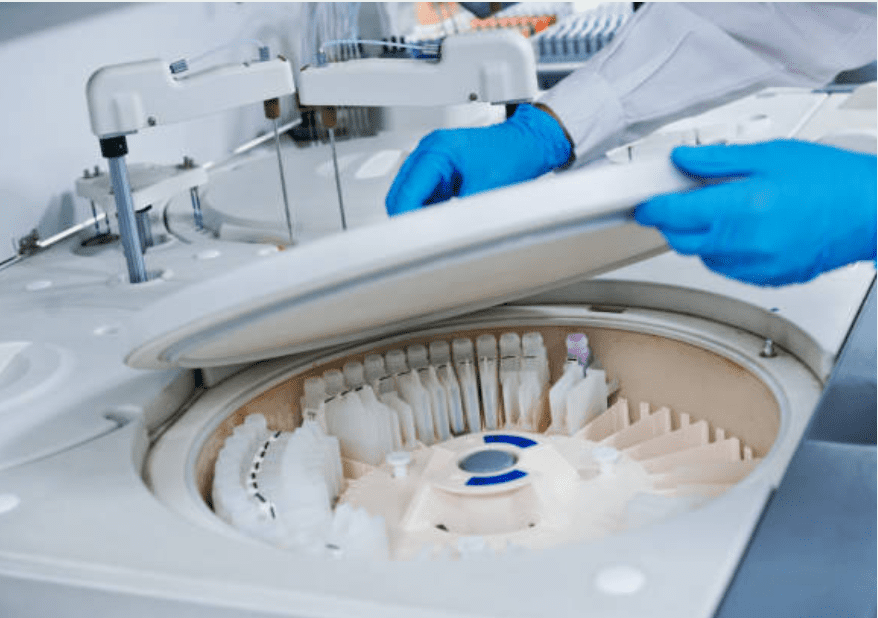
The Tissue Processor is compatible with standard reagents, cassettes, and paraffin, and AMIS provides matched consumables with full documentation.
What Is the ATP-500 Dual Retort Tissue Processor and How Does It Improve Lab Efficiency?
The Dual Retort Tissue Processor is a powerful, scalable solution for labs seeking efficient, reliable, and high-throughput tissue processing. Its dual-retort design, automation features, and global support make it a trusted investment in any pathology workflow.


