


What Makes Intraosseous Infusion Systems Indispensable in Emergency Care?
In emergency situations, every second counts. Traditional IV lines can fail when time is critical. This is where intraosseous (IO) infusion systems come in, providing a rapid, reliable alternative for delivering fluids and medications directly into the bone marrow.
Intraosseous infusion systems are revolutionizing emergency medicine by offering a swift and dependable method for vascular access. These systems are especially valuable when veins are hard to find or access, such as in trauma, shock, or pediatric emergencies.
Curious about how IO infusion systems could impact your practice or facility? Let’s dive into the essentials and explore why this technology is becoming a staple in critical care settings.

What Exactly Is an Intraosseous Infusion System?
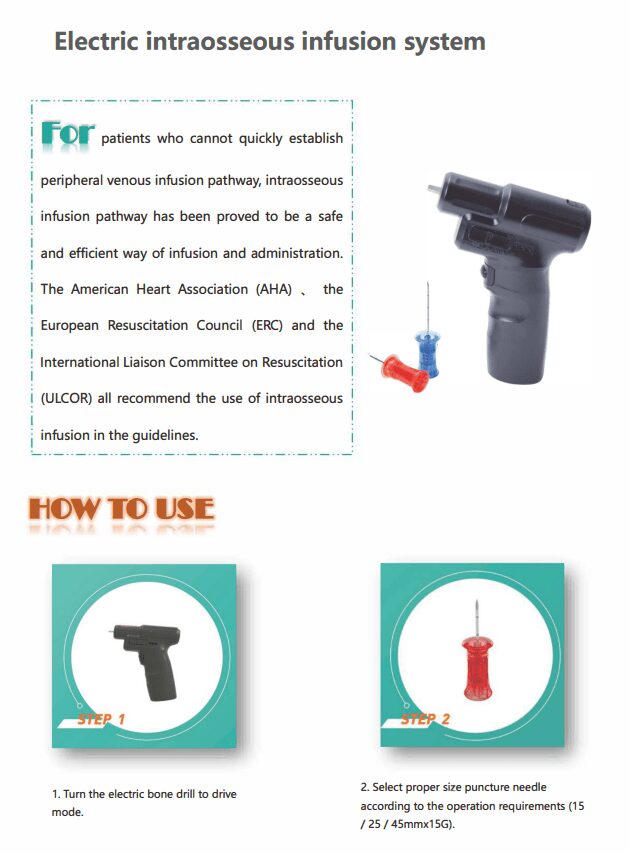
An intraosseous infusion system allows medical professionals to inject fluids, medications, and blood products directly into the bone marrow. This method provides a rapid route to the central circulation when intravenous access is not feasible.
- Why It Matters: Intraosseous access can be achieved in seconds, making it a crucial tool in emergencies where every moment is vital.
- How It Works: The system involves a needle inserted into the bone, typically the tibia or humerus, allowing direct access to the vascular system.
- Key Advantages: Compared to traditional IV methods, IO systems have a higher success rate, especially in patients with collapsed veins or challenging vascular access.
When Should Intraosseous Infusion Be Used?
The decision to use an intraosseous infusion system usually comes in critical situations where time is of the essence, and other methods of access have failed or are impractical.
- Cardiac Arrest: Quick vascular access is critical during cardiac emergencies. IO systems provide a reliable solution when IV access cannot be quickly established.
- Trauma Cases: In trauma, especially with massive blood loss, finding a vein can be challenging. IO provides an immediate alternative.
- Pediatric Emergencies: Children often have smaller veins, making IO an excellent first choice in life-threatening situations.
Are There Risks Associated with Intraosseous Infusion?
Like any medical procedure, intraosseous infusion comes with risks. However, these are minimal compared to the benefits in emergency situations.
- Potential Complications: Complications can include infection, compartment syndrome, or damage to the growth plate in children. These risks are rare and usually outweighed by the benefits in critical care.
- Mitigating Risks: Proper training and technique are crucial to minimize risks. Regular practice and adherence to guidelines significantly reduce the chance of complications.
How Do You Choose the Right Intraosseous Infusion System?
Choosing the right IO system involves several considerations:
- Device Type: There are manual, semi-automatic, and fully automatic IO devices. Each has its advantages, depending on the clinical setting and user proficiency.
- Compatibility and Cost: Ensure the system is compatible with existing hospital equipment and consider the cost implications for your budget.
- Supplier Credibility: As with any medical device, the credibility of the supplier is crucial. Look for companies with a track record of reliability, customer support, and compliance with international standards.
What Are the Current Trends in Intraosseous Infusion Technology?
The field of intraosseous infusion is rapidly evolving, with several trends worth noting:
- Automation and Ease of Use: Modern IO systems are becoming more automated, reducing the skill level required for successful placement.
- Integration with Digital Monitoring: Newer devices are being integrated with digital health monitoring systems for real-time data transmission, improving patient outcomes.
- Miniaturization: Advances in technology are making IO devices smaller and more portable, increasing their utility in field medicine and remote locations.
Can Intraosseous Infusion Systems Improve Patient Outcomes?
Absolutely. By providing quick, reliable access to the vascular system, intraosseous infusion systems can significantly improve outcomes in critical care.
- Reduced Mortality Rates: Studies have shown that rapid IO access can decrease mortality rates in cardiac arrest and trauma cases.
- Improved Drug Delivery: IO systems ensure that medications are delivered quickly and efficiently, critical for drugs like epinephrine in resuscitation efforts.
- Higher Success Rates in Pediatric Care: In pediatrics, where vascular access is notoriously difficult, IO systems provide a high success rate for fluid resuscitation.
What Does the Future Hold for Intraosseous Infusion Systems?
Looking ahead, we can expect even more advancements in intraosseous infusion technology:
- Smart Devices: Future IO systems may include sensors and AI to guide placement and monitor infusion parameters.
- Broader Adoption: As awareness and training improve, the use of IO systems will likely expand beyond emergency departments to include routine hospital and field care.
- Research and Development: Ongoing research aims to refine the materials and designs used in IO devices, further reducing risks and improving patient comfort.
Conclusion
Intraosseous infusion systems are a game-changer in emergency medicine. They provide a rapid, reliable alternative for vascular access, especially when traditional methods fail. With ongoing advancements, these systems will continue to play a vital role in improving patient outcomes across various medical settings.
Considering an upgrade to your facility’s emergency equipment? Intraosseous infusion systems might just be the innovation you need to stay ahead.


